Why ‘kJ to Calories’ Matters in Australia
If you’ve ever glanced at a packaged snack or a café menu in Australia, you’ve likely noticed energy listed in kilojoules (kJ) rather than calories. Many popular fitness apps like MyFitnessPal and Fitbit still measure energy in calories. That can be a bit confusing for Australians, since local food labels use kilojoules instead, especially when trying to compare foods or track daily intake.
Knowing how to convert kilojoules to calories is key to understanding your daily energy intake. It allows you to plan meals more effectively, monitor your diet, and make informed choices about what you eat, whether it’s a quick coffee, a café breakfast, or a full dinner.
In this guide, we’ll explain what kilojoules and calories are, why Australia uses kJ, provide a conversion chart, show practical examples of Australian foods, and include a simple interactive kJ to calories converter so you can see your own values instantly.
What Are Kilojoules and Calories?
Both kilojoules and calories measure energy, which is the fuel your body receives from food and burns through physical activity. While the terms differ, they describe the same concept.
- Calorie (Cal or kcal): Widely used internationally, especially in diet and fitness tracking.
- Kilojoule (kJ): Standard unit in Australia and New Zealand, consistent with the metric system.
Conversion Between kJ and Calories to Find How Many kJ in A Calorie
- 1 Calorie = 4.184 kJ
- 1 kJ = 0.239 Calories
Quick estimation: Divide kilojoules by 4 to get an approximate calorie value.
Example:
- A food item with 2000 kJ has approx 478 Calories.
Why Australia Uses Kilojoules on Food Labels
Australia adopted kilojoules decades ago when it standardized the metric system. The Food Standards Australia New Zealand (FSANZ) requires packaged foods to display energy in kJ, along with serving size and other nutritional information.
The average daily energy intake for an adult is roughly 8700 kJ (about 2079 calories). Nutrition labels often indicate the percentage of this daily value to help people make informed choices. The Health Star Rating system also incorporates energy content in kJ to provide a simple guide for evaluating food healthfulness.
Displaying energy in kJ ensures consistency across all foods and beverages in Australia, helping consumers understand their intake without relying on calorie conversions from overseas.
kJ to Calories Conversion Chart (Quick Reference)
Here’s a handy chart to quickly compare kilojoules to calories:
| Kilojoules (kJ) | Calories (Cal) |
| 800 KJ | 191 Cal |
| 890 KJ | 212 Cal |
| 1000 KJ | 239 Cal |
| 1100 KJ | 263 Cal |
| 1200 KJ | 287 Cal |
| 1300 KJ | 311 Cal |
| 1400 KJ | 334 Cal |
| 1500 KJ | 358 Cal |
| 1600 KJ | 382 Cal |
| 2000 KJ | 478 Cal |
| 2500 KJ | 598 Cal |
| 3000 KJ | 717 Cal |
| 3500 KJ | 836 Cal |
| 5000 KJ | 1196 Cal |
| 6100 KJ | 1458 Cal |
| 8700 KJ | 2079 Cal |
| 9000 KJ | 2151 Cal |
| 10000 KJ | 2390 Cal |
Interactive kJ to Calories Calculator
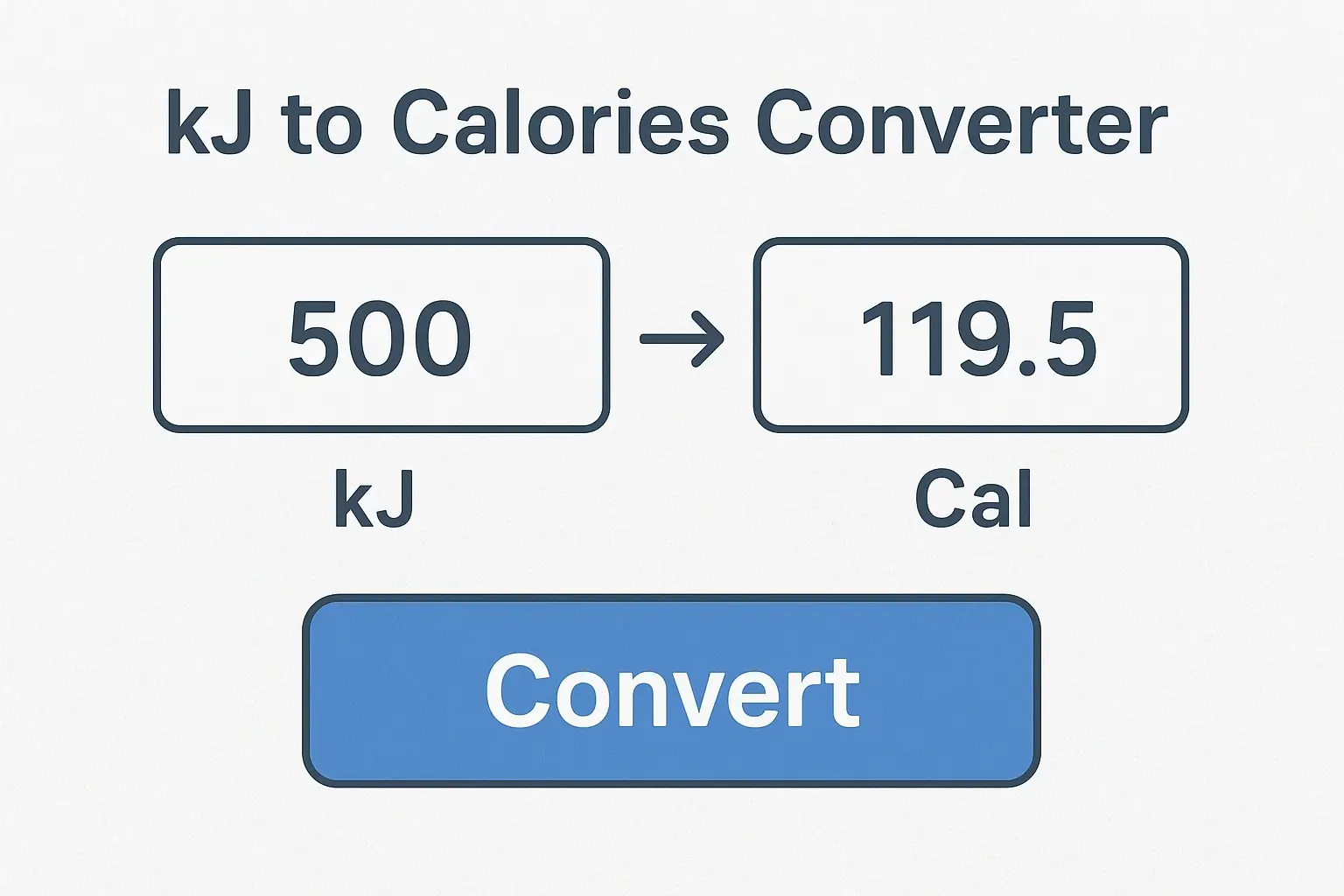
You can convert kilojoules to calories instantly using a simple kJ to Calories calculator. Enter the energy in kJ, and it will give you the value in calories. It also works in reverse to convert calories to kilojoules.
kJ to Calories Converter
Convert easily between kilojoules (kJ) and kilocalories (kcal).
This kj to calories calculator works seamlessly on both desktop and mobile. Try examples like 2000 kJ or 8700 kJ to see typical daily values in calories.
kJ to Calories in Australian Foods (Practical Examples)
Understanding numbers becomes easier when tied to real foods. Here’s how kilojoule values translate to common meals and snacks:
1000 kJ to Calories (≈ 239 Cal)
To convert 1000 kJ to calories (meaning kilocalories, or food calories), you just multiply the kilojoule amount by our conversion factor.
Here’s the simple formula:
Energy in Calories = Energy in Kilojoules × 0.239
So, for 1000 kJ:
1000 kJ × 0.239 = 239 kcal
That’s it! 1000 kilojoules is equivalent to about 239 kilocalories, or 239 food calories. It’s a straightforward calculation once you have the conversion factor handy.
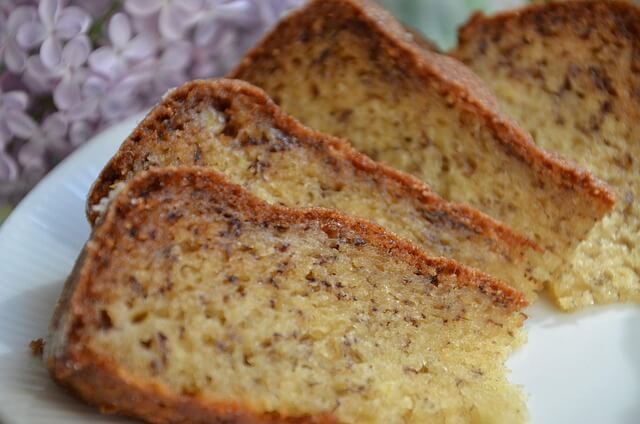
- 1 slice banana bread
- 1 small flat white
- 2 Tim Tams
A light breakfast or snack-sized portion.
1200 kJ to Calories (≈ 287 Cal)
We’re here to learn about the conversion of 1200 kJ to calories, explain why you see 1200 kJ on food labels so often, and help you understand what it really means for your daily meals.
Converting 1200 kJ to calories
So, you’ve got 1200 kilojoules (kJ) and you’re wondering how many calories that actually is? It’s a common question, especially since different places use different measurements for food energy. In Australia, we often see kJ on food labels, but many people are more familiar with calories.
The basic conversion is that 1 kilojoule is roughly 0.239 calories. So, to figure out 1200 kJ to calories, you just do a little bit of math. You can either divide 1200 by 4.184 (since 1 calorie is about 4.184 kJ) or multiply 1200 by 0.239. Either way, you’ll land pretty close to the same number.
Let’s break it down:
- Calculation: 1200 kJ * 0.239 = 286.8 calories
- Alternatively: 1200 kJ / 4.184 = 286.8 calories
Results of 1200 kJ to calories
So, 1200 kJ to calories is about 287 calories. It’s not a huge amount, but it gives you a better idea of the energy content, right? Understanding these 1200kJ to calories conversions helps when you’re trying to keep track of your intake, whether you’re looking at local Australian food labels or comparing with international nutritional information.
It’s pretty straightforward once you know the conversion factor. This kind of information is handy for anyone trying to manage their diet or just understand their food better.
Example of 1200kJ meal
- Avocado toast on sourdough
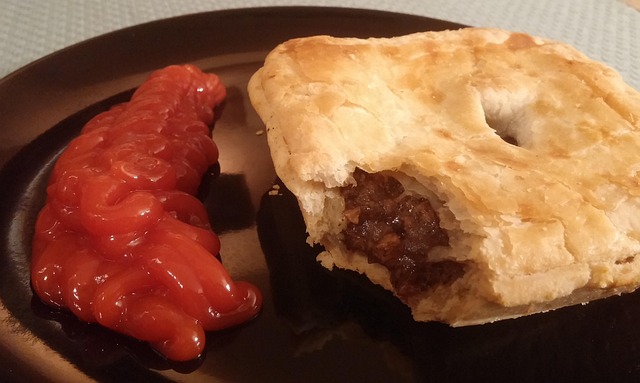
- Party meat pie
- Mini Boost Juice Mango Magic
A classic café breakfast or light brunch.
1500 kJ to Calories (≈ 358 Cal)
Converting 1500kj to calories will be around 358 cal. Now that you have learned how many calories is 1500kj, take a look at an example meal
- McDonald’s cheeseburger
- Bowl of porridge with fruit
- 6-piece sushi roll pack
Common for a light lunch or post-workout meal.
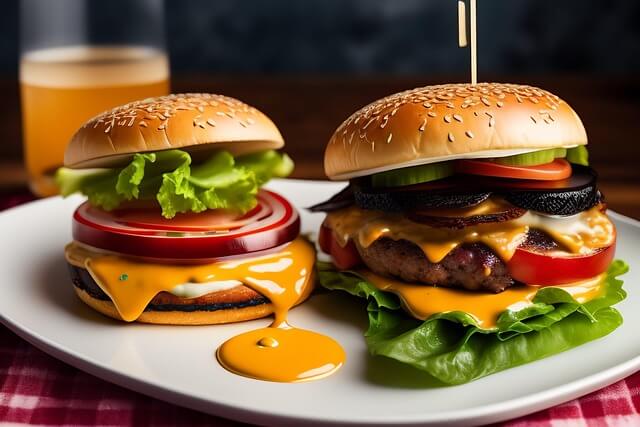
2000 kJ to Calories (≈ 478 Cal)
- Chicken schnitzel burger
- Small laksa bowl
- Subway 6-inch Chicken Teriyaki
A moderate meal portion for lunch or dinner.

2500 kJ to Calories (≈ 598 Cal)
- Grilled fish and chips (small)
- McChicken meal
- Chicken and avo toastie
Typical takeaway or café meal.

3000 kJ to Calories (≈ 717 Cal)
- Half a Domino’s Margherita pizza
- Large pasta bowl
- Kebab with pita and sauce
Hearty single meal for an active day.

5000 kJ to Calories (≈ 1196 Cal)
- Hungry Jack’s Whopper combo
- KFC Zinger meal
- Full café breakfast with eggs, bacon, toast & coffee
A full meal plus sides — close to half a day’s energy for some people.

8700 kJ to Calories (≈ 2079 Cal)
We’re here to break down the conversion of 8700 kJ to calories, figure out why 8700 kJ pops up so often, and talk about what it all means for your daily eats.
Origin of the 8700 kJ Benchmark
So, where does this 8700 kilojoule (kJ) figure actually come from? It’s not just pulled out of thin air, you know. This number is based on national surveys, looking at what people in places like Australia are eating on average. Food Standards Australia New Zealand, for instance, has reported that the average daily intake hovers around 8700 kJ. This makes it a handy reference point, especially for things like food labels.
Converting 8700 kJ to Calories
So, you’ve got 8700 kilojoules (kJ) and you’re wondering what that means in terms of calories. It’s a pretty common question, especially when you’re looking at food labels or trying to get a handle on your daily energy intake.
The basic idea is that 1 Calorie (which is really a kilocalorie, or kcal) is equal to about 4.184 kJ. So, to figure out how many calories are in 8700 kJ, you just need to do a little division.
So, 8700 kJ is roughly 2079 food calories. This number is often cited as the average daily energy intake recommended for adults, so it’s a good benchmark to keep in mind when you’re looking at food labels or planning your meals. Understanding this conversion of 8700kJ to calories is key to making informed dietary choices and managing your energy intake effectively.
Example full-day plan:
- Breakfast: Vegemite toast + coffee (800 kJ)
- Lunch: Chicken sandwich + apple (2000 kJ)
- Dinner: Grilled salmon with veggies (3500 kJ)
- Snacks: Nuts and yogurt (2400 kJ)

Calculating kJ to Calories Yourself
You can manually convert energy using:
Calories = kJ × 0.239
Example calculations:
- 1600 kJ × 0.239 = 382 Calories
- 2500 kJ × 0.239 = 598 Calories
For reverse conversion: Calories × 4.184 = kJ.
The interactive kj to calories converter provides instant results for multiple meals or snacks.
Using kJ and Calories for Weight Management
Energy balance is the key to weight management. If you consume more energy than you burn, you gain weight; if you consume less, you lose weight.
Reducing around 2000 kJ/day (~480 Calories) can lead to approximately 0.5 kg of weight loss per week, depending on metabolism, activity, and body composition.
Monitoring kilojoules and understanding how they translate to calories can help you plan meals, control portions, and make healthier choices, particularly given high overweight and obesity rates among Australian adults.
Reading Australian Food Labels
Energy in kilojoules is displayed at the top of the Nutrition Information Panel. Labels typically show:
- Per serving: Energy consumed per portion.
- Per 100 g: Standardized value for comparing similar foods.
Serving sizes may differ from typical consumption, so always check the quantity. The Health Star Rating provides a quick guide to overall nutritional quality, factoring in energy, saturated fat, sugar, sodium, protein, and fiber.
Strategic Summary
Being able to read kilojoules and figure out what they mean in calories helps you make smarter choices about your meals. Understanding energy content helps you plan meals, track intake, and maintain a healthy weight, while still enjoying familiar Australian foods.
Tools like conversion charts and interactive calculators make it simple to see energy in both kilojoules and calories, helping you make smarter, healthier eating decisions every day.
Frequently Asked Questions
How Many Kilojoules in a Calorie in Australia?
1 Calorie is equal to 4.184 kilojoules.
How Many Kilojoules Are in 1000 Calories?
1000 Calories equal approximately 239 kilojoules (kJ).
How Many Kilojoules Is 800 Calories in Australia?
800 Calories equal approximately 3347 kilojoules (kJ).
How Many Calories in 8700 kJ?
8700 kilojoules equal approximately 2079 Calories.
Why Does Australia Use kJ Instead of Calories?
Australia uses kilojoules because they are part of the metric system and are required by food labelling regulations in Australia.
How Can I Convert Calories to kJ?
Multiply the number of Calories by 4.184.
Which Australian Foods Are Around 2000 kJ?
Examples include chicken schnitzel burgers, small laksa bowls, or a 6-inch Subway chicken teriyaki sub.
Is 8700 kJ Suitable for Everyone?
Everyone’s energy needs are different, depending on your age, sex, how active you are, and your body type.