What Is a Bird Eating Spider in Australia?
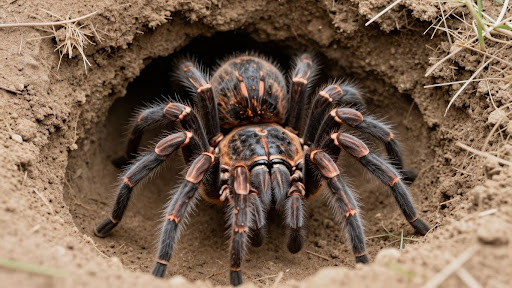
Australian “bird-eating spiders” are large native tarantulas (mainly from the Selenocosmia genus). Despite the name, they rarely eat birds. Their normal diet includes insects, frogs, lizards, and small mammals. They are also known as barking spiders or whistling spiders and live in underground burrows across much of Australia.
Bird Eating Spider Australia – Quick Facts
-
Scientific group: Australian tarantulas (Selenocosmia species)
-
Common names: Bird-eating spider, barking spider, whistling spider
-
Size: Up to 16–20 cm leg span
-
Diet: Insects, frogs, lizards, small mammals
-
Do they eat birds? Very rarely
-
Danger to humans: Painful bite but rarely serious
-
Lifespan: Females 15–25 years, males 3–6 years
-
Habitat: Burrows in forests, woodlands, and grasslands
What Does “Bird Eating Spider Australia” Mean?
When you hear bird eating spider Australia, it conjures up some pretty wild images, doesn’t it? Most people picture these massive spiders snatching birds right out of the sky, or maybe from their nests. It’s a dramatic thought, and honestly, it’s mostly just a myth that’s stuck around.
The truth is, Australian tarantulas, despite their common name, very rarely actually eat birds. It’s a bit of a sensationalised label that doesn’t really reflect their day-to-day lives.
So, where did this name come from? Well, it seems to stem from some old-school illustrations, like one from the 18th century showing a rather large spider munching on a hummingbird. While a tiny hatchling bird might occasionally end up as a snack if it falls into a burrow, it’s definitely not their go-to meal. Think of it like calling a dog a ‘cat chaser’ – sure, they might chase a cat sometimes, but it’s not their main diet.
What do they actually eat then? It’s a much more down-to-earth menu:
- Insects (beetles, crickets, cockroaches)
- Lizards
- Frogs
- Other spiders
Occasionally, a very small, ground-nesting bird’s chick might be taken, but it’s a rare event. The name ‘bird-eating spider’ is more about their intimidating size and the dramatic stories that get told than their actual hunting habits. It’s a bit of a misnomer, really. For a bit more on the actual diet of these spiders, you can check out what they typically eat.
It’s easy to get caught up in the sensationalism, but understanding the reality behind the name helps us appreciate these creatures for what they are – important predators in their own right, not just feathered-food fanatics.
Which Species Are Called Bird Eating Spiders in Australia?
When folks talk about a bird eating spider Australia, they’re usually referring to a few different types of large, hairy tarantulas. It’s a bit of a catch-all term, really, and not always super precise. The most common ones that get this label belong to the genus Selenocosmia. These are the giant spiders you’ll find lurking in burrows across the country.
It’s important to remember that despite the dramatic name, these spiders don’t actually hunt birds as a regular meal. That whole “bird-eating spider” thing mostly comes from a historical engraving showing a South American tarantula with a bird. While it’s not impossible for a very small bird, like a hatchling, to end up as a snack if it wanders too close to a burrow, it’s super rare. Their usual menu is more along the lines of insects, lizards, frogs, and other invertebrates.
Here are some of the main groups you’ll find in Australia that are often called bird-eating spiders:
- The Selenocosmia genus: This is the big one. Species like Selenocosmia crassipes (though many sold as this are actually different) and Selenocosmia stirlingi are common. They’re found in various habitats, from rainforest edges to drier areas.
- Other Genera: You also have spiders from genera like Coremiocnemis, Selenotholus, and Selenotypus, mostly found in the northern parts of the country.
It can be tricky to tell them apart, even for experts. Many species are still being studied and don’t even have official names yet. So, while the name “bird-eating spider Australia” sounds pretty intimidating, the reality is these spiders are more interested in the usual creepy crawlies that share their environment. They’re a vital part of the ecosystem, keeping insect populations in check, rather than raiding bird nests.
Australian Bird Eating Spider vs Goliath Birdeater
Many people confuse Australia’s bird-eating spiders with the famous Goliath birdeater (Theraphosa blondi) from South America. While both are large tarantulas, they are different species with different behaviours.
The Goliath birdeater is the world’s heaviest spider and is more likely to occasionally prey on small birds. Australian bird-eating spiders, mainly from the Selenocosmia genus, are generally smaller. Their typical diet consists of insects, frogs, lizards, and other small animals.
In short, Australia does not have true Goliath birdeaters. The “bird-eating spider Australia” name refers to native tarantulas that mostly hunt ground-dwelling prey rather than birds.
Physical Characteristics of Australia’s Bird Eating Spiders
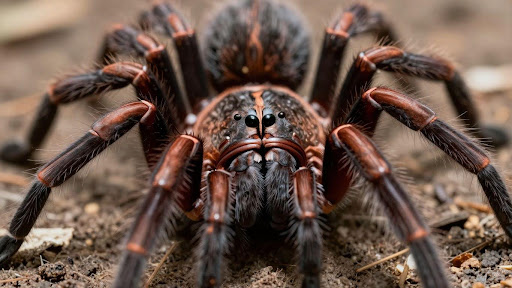
Right, let’s talk about what these Aussie bird-eating spiders actually look like. Forget those tiny little house spiders you might see scuttling around; these fellas are proper substantial. They’re generally quite stocky, with a heavy body that can range in colour from a deep, rich chocolate-brown to a more reddish-brown, or sometimes even a pale fawn. Some of them have this cool silvery sheen to their bodies, which is pretty neat.
When it comes to size, they’re definitely on the larger end of the spider spectrum. While they might not always reach the colossal sizes of some South American cousins, they’re still impressive. Their leg spans can be quite significant, and their bodies are robust.
And those fangs? Yeah, they’re a thing to note. They’re pretty substantial, designed for their hunting style. While they’re not usually looking to bite humans, and their venom isn’t typically dangerous to us, those fangs are certainly capable of breaking the skin. It’s a good reminder to give them plenty of space.
Here’s a quick rundown of some general features:
- Body Shape: Heavy-bodied and robust.
- Colouration: Varies from dark brown to reddish-brown or fawn, often with a metallic sheen.
- Legs: Thick and strong, often covered in hair.
- Fangs: Large and prominent, used for subduing prey.
One thing that’s quite distinctive is the hairiness. These spiders are often covered in a thick coat of hair all over their bodies, including their legs and abdomen. It’s not just for show; this hair can actually help them sense vibrations in their environment, which is a big part of how they find their dinner.
It’s easy to get caught up in the ‘bird-eating’ name and imagine something monstrous, but their physical traits are really about efficient predation in their specific environment. They’re built to be effective hunters of the creatures they typically encounter, which are more often insects and small vertebrates than actual birds.
Some species have unique features, like long hairs on their rear legs, which make them stand out. It’s these little details that help scientists tell them apart, though for the average person, they all look pretty formidable and hairy!
Habitat and Distribution of Bird Eating Spiders in Australia
Right then, let’s talk about where you’re likely to bump into these big fellas. Australian tarantulas, or as some call them, ‘bird-eating spiders’, aren’t exactly spread out like butter on toast. They’ve got their preferred spots, and you’ll mostly find them hanging out in burrows they’ve dug themselves.
These burrows are pretty important to them. The adult females, especially, are homebodies and live in these silk-lined tunnels in the ground. They can be quite deep, sometimes going down a metre or so, which helps keep them at a nice, stable temperature. It’s not just about staying cool or warm, though; these burrows are their safe havens for moulting, laying eggs, and generally just chilling out away from the harsh Aussie sun and any potential predators.
Younger spiders and the males? They’re a bit more transient. They might make do with simpler shelters, like little silk retreats tucked away under rocks or fallen logs. It’s not as fancy as a proper burrow, but it does the job for them when they’re on the move or haven’t quite established themselves.
So, where exactly in Australia are we talking about?
- Queensland: This is a big one. You’ll find various species here, from the rainforest areas to drier inland spots.
- New South Wales: Similar to Queensland, different species call this state home, often in woodland and forest areas.
- South Australia: Certain species can be found here, though perhaps not as commonly as in the eastern states.
- Western Australia: Some tarantulas inhabit parts of this vast state, adapting to its unique environments.
- Northern Territory: While some species are found here, it’s not as widespread as in the eastern states.
It’s worth noting that some species, like Selenocosmia stirlingi, are pretty widespread, stretching across different habitats from rainforests to more arid zones, but they tend to steer clear of the far northern tropics. Others are more specialised, sticking to particular regions.
The exact location of a tarantula burrow can depend on the species, the local climate, and the available ground. They often build near food sources, but their primary concern is a stable, safe environment to retreat to. You might see a bit of silk around the entrance, or even some grass or soil piled up from their digging efforts.
It’s a bit of a mixed bag, really. While they’re found across a good chunk of the continent, they’re not everywhere. You’re more likely to find them in areas with suitable soil for burrowing and a decent supply of their usual grub – think insects and other small critters.
Burrowing Behaviour and Shelter Construction in Australian Tarantulas
Australian tarantulas, often called ‘bird-eating spiders’, are masters of their underground domain. They spend a good chunk of their lives in burrows they’ve dug themselves, which serve as a haven from predators and the harsh Australian elements. These aren’t just random holes in the ground, though. They’re carefully constructed homes, often lined with silk.
Adult females, in particular, are serious burrow architects. They dig deep tunnels, sometimes going down a metre or more. The depth can vary a lot, not always matching the spider’s size. This underground living helps them keep a steady temperature, which is pretty important for their activity and growth, especially during the warmer months from September to May. During the really hot spells of summer or the cooler parts of winter, they might even seal up their burrows.
Younger spiders and males might not go to such lengths, often making do with simpler silk retreats under rocks or fallen logs. But even these basic shelters are usually reinforced with silk. Around the entrance of a more established burrow, you might notice a little lip of soil or even some grass, a tell-tale sign of the spider’s excavation work. Some even have a thin layer of silk across the opening, like a little curtain.
These burrows are more than just a place to hide; they’re a vital part of the spider’s life cycle, providing a stable environment for moulting, laying eggs, and waiting for prey to wander by. The silk lining helps keep the burrow walls from collapsing and can also help regulate humidity.
Here’s a quick look at what goes into their burrow life:
- Location: Usually in the ground, often in areas with good drainage.
- Construction: Dug using their fangs and front legs, with silk used to reinforce the walls and create a comfortable lining.
- Purpose: Protection from predators, temperature regulation, a safe place for moulting, and a hunting ambush point.
- Maintenance: Spiders regularly maintain and deepen their burrows throughout their lives.
Nighttime Activity
When the sun dips below the horizon and the Australian bush settles into its nighttime rhythm, that’s when the real action begins for our local bird-eating spiders. These fellas are strictly nocturnal, meaning they do all their serious hunting under the cloak of darkness. It’s like they’ve got a built-in curfew, and they stick to it.
Their active hours are primarily between dusk and dawn. This timing isn’t just a random choice; it plays a big part in their hunting success and survival. By waiting for the cool, quiet of the night, they avoid the heat of the day and also the attention of diurnal predators that might see them as a meal themselves.
Here’s a bit of a breakdown of their nighttime routine:
- Emerging from Burrows: As soon as it gets dark enough, they start to stir. Many species will cautiously peek out from their burrows or shelters, testing the air and ground for any vibrations.
- Patrolling Territory: Some might venture a short distance from their home base, keeping an eye out for potential prey that wanders too close.
- Ambush Ready: Others prefer to stay put, relying on their excellent camouflage and patience to wait for a meal to come to them.
It’s a patient game, for sure. They’re not exactly chasing down their dinner like a cheetah. Instead, they’re masters of stillness, waiting for the perfect moment to strike.
The darkness offers a natural advantage, masking their movements and allowing them to use their heightened senses of touch and vibration to detect unsuspecting creatures. It’s a world of subtle cues and sudden action, all happening while most other things are fast asleep.
So, if you’re ever out and about in their habitat after dark, remember that you’re entering their prime hunting time. Just tread carefully and enjoy the quiet – they certainly are.
Hunting Strategy
These spiders are patient hunters, relying on a classic ambush strategy. They’re not exactly chasing down their meals across the bushland. Instead, they find a good spot, often near their burrow entrance or a well-used game trail, and just wait. It’s all about conserving energy and letting dinner come to them.
Their hunting grounds are usually their own burrows or silk-lined tunnels. They’ll often create a sort of tripwire system around the entrance using silk. When a little critter, like a juicy beetle or an unsuspecting lizard, bumps into these silken threads, it sends vibrations right back to the spider waiting inside.
The moment the spider senses movement, it bursts out of its hiding spot with surprising speed. It’s a quick grab, using those powerful front legs to secure the prey before it can get away. Then, it’s a swift injection of venom to immobilise the meal.
Here’s a bit of a breakdown of how they do it:
- Camouflage and Patience: They blend in with their surroundings, often staying perfectly still for long periods. Think of them as furry, eight-legged statues.
- Vibration Detection: Those fine hairs all over their body aren’t just for show; they pick up even the slightest tremors in the ground or their silk tripwires.
- Explosive Burst: Once prey is detected, the attack is sudden and forceful. It’s over before the victim even knows what hit it.
- Drag Back: After subduing the prey, they usually drag it back into the safety of their burrow to eat.
It’s a pretty effective method, especially when you consider how much energy they save by not having to chase things down. They’re masters of the ‘sit and wait’ game, and it works wonders for them in the Australian environment.
How Bird Eating Spiders Detect Prey
You might think these big spiders just stumble upon their dinner, but no, they’re way more sophisticated than that. Australian bird-eating spiders, like most tarantulas, have this incredible way of sensing their surroundings, and it all comes down to their fuzzy bits.
Their bodies are covered in tiny, sensitive hairs, called setae. These aren’t just for show, mind you. They pick up on the slightest movements and vibrations in the ground or air. Think of it like having a super-sensitive tremor detector all over your body. When a tasty morsel, like a juicy beetle or a little lizard, scurries past, the vibrations travel through the ground and right up to the spider. This allows them to pinpoint the exact location of their next meal, even in complete darkness.
Here’s a bit of a breakdown on how they use these senses:
- Ground Vibrations: The most common way they detect prey. Footsteps, rustling leaves, anything that disturbs the ground sends signals.
- Air Currents: Some of these hairs can also detect changes in air movement, which might indicate something flying nearby or a larger creature approaching.
- Chemical Cues: While not their primary hunting tool, some hairs might also pick up on scent trails left by potential prey.
It’s pretty wild to think about. They’re basically living seismographs, constantly monitoring their environment. This sensitivity is key to their ambush hunting style, letting them stay hidden and wait for the perfect moment to strike.
These spiders rely heavily on feeling the world around them. It’s less about seeing and more about sensing the subtle shifts that signal food or danger. Their hairy bodies are finely tuned instruments for this purpose.
So, next time you see one of these impressive arachnids, remember all those little hairs are doing some serious work, helping them find their next meal. It’s a fascinating adaptation that makes them such effective predators in the Australian landscape. You can read more about their sensory hairs and how they’re used for defence and communication on pages like this one.
Typical Diet of a Bird Eating Spider in Australia
Despite their rather dramatic name, Australian bird-eating spiders aren’t exactly feasting on feathered friends every night. While it’s true that a very young spiderling might occasionally nab a hatchling from a ground nest, that’s pretty much the extent of the bird-eating for most of these big fellas.
Their usual grub is a lot more down-to-earth. Think insects – beetles, crickets, that sort of thing. But they’re not picky eaters, not by a long shot. Lizards and frogs are definitely on the menu, and if a small mouse or other tiny mammal happens to wander too close, well, that’s dinner too. They’re opportunistic hunters, after all.
Here’s a rough idea of what you might find in their diet:
- Insects (various types)
- Lizards
- Frogs
- Small mammals (like mice)
- Other spiders
It’s a pretty varied spread, showing they’re well-adapted to whatever prey is available in their environment. They’re not just sitting around waiting for a bird to fall out of the sky, that’s for sure.
These spiders are patient predators. They often wait in their burrows or a camouflaged spot, relying on vibrations to sense when something edible is nearby. Once prey is close enough, they strike quickly.
So, while the name might be a bit of a scare tactic, their actual diet is more about survival and making the most of what Australia’s bushland has to offer.
Do Bird Eating Spiders Really Eat Birds in Australia?
Australian tarantulas very rarely actually eat birds. The name mostly comes from a historical engraving showing a South American tarantula munching on a hummingbird, and that image just stuck.
So, what’s on the menu for these big fellas down under?
- Insects (beetles, crickets, cockroaches)
- Lizards and frogs
- Other spiders
- Occasionally, very young birds or nestlings, if they happen to be within easy reach, are usually from ground nests.
Think of them more as opportunistic hunters. They’re not actively hunting birds, but if a small, vulnerable creature like a baby bird or a lizard wanders too close to their burrow, well, dinner is served.
The reputation for bird-eating is largely a myth, a holdover from early descriptions that didn’t fully capture their typical diet. While they are large and powerful predators, their primary food sources are much smaller and more common.
While the Goliath birdeater, a species found in South America, is known to occasionally take birds, Australian species are generally more focused on smaller prey. Their diet is more about what’s readily available in their environment, which usually means plenty of insects and small vertebrates. It’s a common misconception that they actively seek out birds as a main food source, but the reality is far less dramatic. You can find more about the general diet of Australian tarantulas and their hunting habits.
Venom and Prey Immobilisation
So, how do these big spiders actually get their dinner sorted? It’s all about the venom. When an Australian bird-eating spider catches something, its first move is usually to sink those impressive fangs in. The venom isn’t like a snake’s, designed to kill quickly from a distance. Instead, it’s more of a digestive aid and immobiliser.
Think of it like this:
- Injection: The spider uses its large fangs, which can be a couple of centimetres long, to pierce the prey’s body.
- Venom Delivery: A cocktail of enzymes and toxins is pumped in. This stuff starts breaking down the insides of the prey.
- Paralysis: While the breakdown is happening, the venom also works to stop the prey from moving. This is super important so the spider doesn’t have a struggling meal on its hands (or, well, legs).
It’s not usually a super-fast knockout punch. For smaller critters like insects, it might be pretty quick. But for something a bit bigger, like a lizard or a small mouse, it can take a bit longer for the venom to do its job. The venom’s main goal is to turn a lively meal into a soft, soupy mess that the spider can then easily slurp up.
The venom of Australian bird-eating spiders is primarily a digestive agent. It liquefies the prey’s internal tissues, making them easier to consume. While it can cause paralysis, it’s not typically potent enough to kill larger prey instantly, but rather to subdue it and begin the external digestion process.
External Digestion
So, how does a big ol’ bird-eating spider actually eat its dinner? It’s not quite like us chomping down a steak, that’s for sure. Once they’ve got their prey, usually dragged back to their burrow, they don’t just start chewing.
Instead, these spiders have a pretty neat trick up their sleeve. They inject digestive juices into their meal. Think of it like a pre-digestion bath. These juices break down the insides of the prey, turning it into a sort of soupy liquid.
Here’s a rough idea of the process:
- Venom Injection: First, they use those big fangs to inject venom. This not only immobilises the prey but also starts the breakdown.
- Digestive Enzyme Release: After the prey is subdued, the spider regurgitates or injects more digestive enzymes directly into the prey’s body.
- Liquefaction: These enzymes work their magic, dissolving the soft tissues and organs of the victim.
- Sipping the Meal: Finally, the spider uses its mouthparts, which are more like straws, to suck up the liquefied insides. What’s left is basically an empty husk.
It sounds a bit gruesome, but it’s a super-efficient way for them to eat. Because they can’t chew solid food, this external digestion is how they manage to get all the nutrients they need from their meals.
This method means they don’t need to eat all that often. They can take their time, digest properly, and then go a good while before their next hunt. It’s all about conserving energy, especially when meals can be few and far between.
So, while they might look a bit intimidating, their eating habits are actually a marvel of natural engineering. It’s a far cry from a backyard barbecue, but it gets the job done for these impressive arachnids.
Feeding Frequency and Energy Conservation in Bird Eating Spiders
You might think these big spiders are chowing down all the time, but that’s not really the case. Bird-eating spiders, like many other large predators, are pretty smart about how they use their energy. They don’t need to eat every single day, or even every week.
Think of it like this: when they do manage to catch a decent-sized meal, like a lizard or a big insect, it’s a massive energy boost. They can store that energy and use it for a long time. This is super handy because, let’s be honest, catching prey isn’t always easy, even for a big spider.
Here’s a bit of a breakdown on why they can go without food for a while:
- Slow Metabolism: Their bodies just don’t need to run at full speed all the time. They’re built for conserving energy.
- Efficient Digestion: When they do eat, they’re really good at getting all the good stuff out of their food. They digest their prey externally, sort of like pre-digesting it, so they can absorb more nutrients.
- Opportunistic Hunters: They’re not actively chasing things down constantly. They’re more likely to wait for an easy opportunity to grab something that comes too close.
So, if you see one of these spiders, don’t expect it to be constantly hunting. It might have just had a big meal and is perfectly happy to chill out for a while, waiting for the next opportunity to come its way. It’s all about survival and making the most of what nature provides.
This approach to eating means they can survive for weeks, or even months, without a meal. It’s a survival tactic that helps them through lean times when food might be scarce in their environment.
Bird Eating Spider Australia vs Other Predatory Spiders
When you look at how Australian ‘bird-eating’ spiders hunt compared to other predatory spiders, it’s pretty interesting. Most spiders are ambush predators, right? They wait for something to wander by. Our local tarantulas are much the same, often chilling in their burrows or a well-hidden spot, waiting for a meal to come to them. They’re not exactly chasing things down like a cheetah.
Think about a wolf spider, for instance. They’re out and about, actively hunting on the ground, often during the day. Or consider a jumping spider – they’ve got amazing eyesight and actively stalk their prey, sometimes from a distance, before making a quick leap. Even some of the smaller, faster spiders are out there actively pursuing insects.
Australian tarantulas, on the other hand, are more about patience. They rely on vibrations and sensing movement nearby. Their hunting style is more about conserving energy. They’ll wait, sometimes for days or even weeks, until a suitable meal like a lizard, frog, or a big insect comes within striking distance. Their strategy is less about speed and more about a powerful, sudden strike from a concealed position.
Here’s a quick look at how they stack up:
- Australian Tarantulas: Ambush predators, rely on vibrations, patient, powerful strike from hiding.
- Wolf Spiders: Active hunters, often hunt on the ground, have good eyesight, and chase prey.
- Jumping Spiders: Stalkers, excellent vision, active pursuit, pounce.
- Orb-Weavers: Trap prey in webs, passive hunting, and rely on web structure.
It’s a different approach to the same goal: dinner. While some spiders are built for the chase, our tarantulas are masters of the patient wait, using their size and strength when the moment is right.
While the name ‘bird-eating’ might sound dramatic, the reality is that these spiders are opportunistic. Their primary hunting method involves waiting for prey to come close, rather than actively pursuing it over long distances. This patient approach is common among many large, burrowing spiders worldwide.
So, while they might not be out there actively hunting birds every day, their hunting style is still a pretty effective way to survive in the Australian bush. It’s all about using what you’ve got, and for these tarantulas, that means a good hiding spot and a lightning-fast grab when the chance arises.
Safety and Risk
Right, let’s talk about the big ones – the ‘bird-eating’ spiders of Australia. Now, the name alone sounds a bit scary, doesn’t it? But before you start picturing them swooping down on your pet budgie, let’s get a few things straight. These spiders, often called tarantulas, are generally more interested in keeping to themselves than causing trouble.
While their bite can be painful due to their large fangs, they’re not typically aggressive towards people. They’d much rather make a quick exit if they feel threatened. Think of them like a grumpy old bloke who just wants to be left alone in his armchair – he might grumble if you bother him, but he’s not going to chase you down the street.
So, what happens if you do get bitten? Well, it’s not exactly a walk in the park. The bite itself is painful, and some people have reported feeling quite unwell afterwards, with symptoms like nausea and vomiting lasting for several hours. It’s always a good idea to seek medical attention if you’re feeling poorly after a bite, and if you can safely collect the spider for identification, that can help the doctors out.
Here’s a quick rundown of what to expect:
- Pain at the bite site: Expect it to hurt, and hurt quite a bit.
- Nausea and vomiting: This can kick in a few hours after the bite.
- General unwellness: Some folks just feel pretty rough all over.
It’s worth remembering that these spiders are part of Australia’s unique wildlife. They play a role in keeping insect populations in check, and while they look intimidating, they’re usually just trying to survive like the rest of us. If you’re keeping one as a pet, which some people do, be extra careful when cleaning their enclosure and avoid handling them directly. It’s a good idea to be aware of spider bite first aid in general when you’re out and about in Australia.
If symptoms are severe or persistent, seek medical attention immediately.
Ecological Role
These big fellas, often called bird-eating spiders, actually play a pretty important role in keeping our Aussie ecosystems ticking over. They’re not just creepy crawlies; they’re skilled predators that help keep populations of other critters in check. Think of them as nature’s pest control, but with more legs and a bit of venom.
Their main gig is keeping insect numbers down. We’re talking about all sorts of bugs that could otherwise munch their way through plants or spread disease. They also snack on lizards and frogs, which helps balance out those populations, too. It’s a whole food web thing, and these spiders are a key part of it.
Here’s a quick look at what they help manage:
- Insects: Beetles, moths, crickets – you name it, they’ll likely eat it. This stops any one insect species from getting out of hand.
- Small Vertebrates: Lizards, geckos, and even small frogs can become a meal, helping to regulate their numbers.
- Other Invertebrates: They’re not fussy and will happily take on other spiders or large insects.
While they might seem a bit scary, these spiders are actually quite shy and generally avoid humans. Their presence is a sign of a healthy environment, showing that there’s enough food and habitat for them to thrive. Losing them could have ripple effects, potentially leading to an increase in prey populations that could then impact plant life or even other native animals, much like how introduced predators affect native marsupials.
It’s easy to focus on the ‘eating’ part of their name, but their real importance lies in their contribution to biodiversity. By controlling prey populations, they help maintain a balance that benefits a wide range of other Australian wildlife. So, next time you think about these spiders, remember they’re doing a vital job out there in the bush.
Bird-eating spiders are super important in Australia’s wild places! They’re like nature’s pest controllers, keeping other critter numbers in check. Plus, they add to the amazing variety of life Down Under. Want to learn more about these fascinating creatures and their role in our environment? Visit the News Insights Australia website for more awesome Aussie nature facts!
Frequently Asked Questions
Still curious about Australia’s bird eating spiders? Here are some common questions people ask.
What are the biggest spiders in Australia called?
The biggest spiders in Australia are native tarantulas often referred to as bird eating spiders. These large, hairy spiders belong mainly to the Selenocosmia genus and are among the largest spiders on the continent.
Are Australian bird eating spiders dangerous to humans?
While they look intimidating, Australian tarantulas are not usually aggressive towards people. If they feel threatened, they might bite, and their bite can be painful because of their large fangs. Some people might feel sick afterwards, but danger is rare.
What should you do if bitten by a bird eating spider?
Clean the bite with soap and water, apply a cold pack to reduce pain and swelling, and seek medical advice if symptoms worsen. While bites are rarely dangerous, they can be painful and may cause nausea or discomfort.
Why are they sometimes called ‘whistling’ or ‘barking’ spiders?
Some Australian tarantulas can make noises by rubbing parts of their legs together. This sound, which can be like a whistle or a hum, is usually made when they feel threatened and is thought to scare off predators.
How long do Australian bird eating spiders live, and do males and females differ?
Female Australian bird eating spiders can live between 15 and 25 years in the wild. Males have much shorter lifespans, usually 3 to 6 years, and often die shortly after reaching maturity and mating. Females continue growing and remain in their burrows for many years, while males typically leave their shelters to search for mates.
Can Australian tarantulas swim?
Surprisingly, yes! Some Australian tarantula species have been observed to be able to swim. They can even coat themselves in air bubbles to help them survive in flooded areas and reach their burrows.