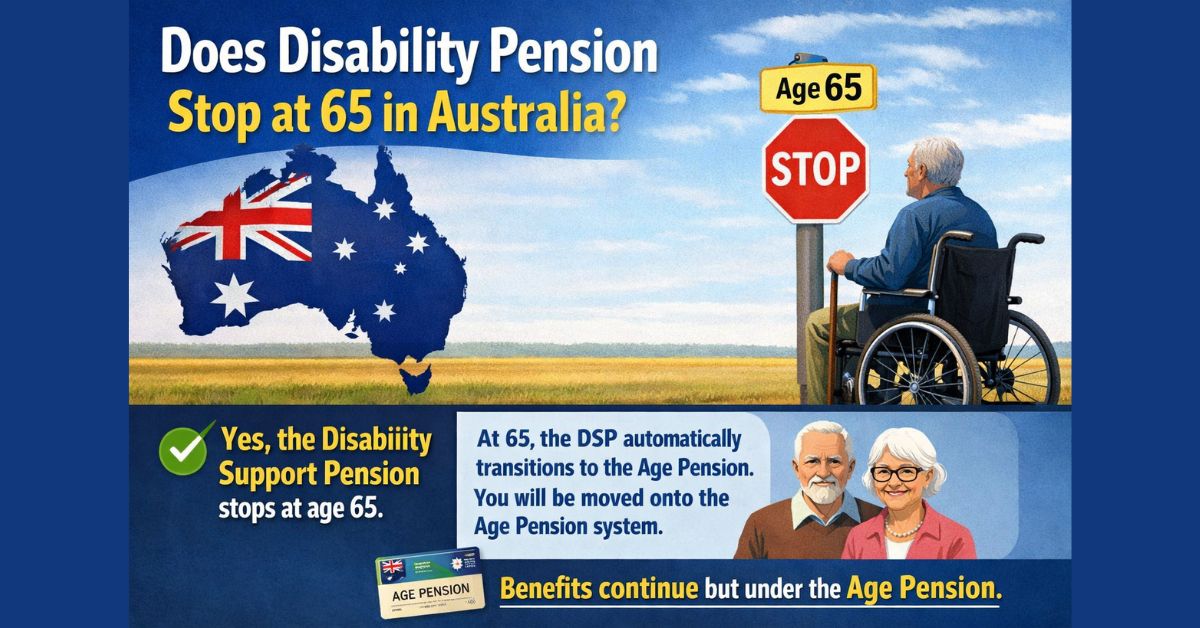
Turning 65 is a big deal, right? It often brings up a lot of questions, especially if you’re currently getting the Disability Support Pension (DSP). People often wonder, ‘Does disability pension stop at 65 in Australia?’ Well, it’s not quite as simple as a yes or no. It doesn’t just cut off automatically, but things do change. What happens next really depends on your individual situation and whether you decide to switch to the Age Pension or stick with your current support. This guide will break down what you can expect as you approach this milestone, and does disability pension stop at 65.
An Overview of Does Disability Pension Stop At 65
So, you’re hitting the big 6-5 and wondering about your Disability Support Pension (DSP). It’s a pretty common question, and honestly, the whole process can feel a bit confusing. Does disability pension stop at 65 in Australia? Well, it’s not quite as simple as a hard stop. For many, turning 65 means a shift from the DSP to the Age Pension, but it’s usually not an abrupt cut-off. Centrelink will get in touch well before your birthday to guide you through what happens next.
Think of it less like a switch being flicked off and more like a gentle handover. The key thing to remember is that you generally won’t need to reapply from scratch or prove your disability all over again. The focus shifts from your medical condition to your age, income, and assets. It’s a big life change, and understanding the ins and outs can make a world of difference.
Here’s a quick rundown of what you might expect:
- Notification from Centrelink: You’ll receive a letter about 13 weeks before your 65th birthday. This is your heads-up to start thinking about the transition.
- Choice or Automatic Transfer: In most cases, you’ll be invited to transition to the Age Pension. If you don’t respond, your payments might pause until you confirm your decision.
- Focus on Age Pension Criteria: Once you move across, eligibility is based on age, income, and assets, not your disability.
It’s important to know that while the DSP might end, support doesn’t necessarily disappear. The system is designed to transition you, and with the right information, you can keep your financial support flowing smoothly.
Many people worry about whether their disability pension stops at 65, but the reality is that the system is set up to manage this transition. The specifics can vary, so paying attention to the information Centrelink sends you is really the best way to stay on top of things. We’ll explore the details of this shift further in the following sections.

Understanding the Disability Support Pension in Australia
Right, let’s talk about the Disability Support Pension, or DSP as most people call it. Basically, it’s a payment from Centrelink designed to help out folks who have a physical, intellectual, or psychiatric condition that makes it really tough, or even impossible, to hold down a job. It’s a pretty important safety net for a lot of Australians.
To even be considered for the DSP, you generally need to tick a few boxes. You’ve got to be between 16 and the Age Pension age, which is currently 67, and you need to have been living in Australia for a while. The big one, though, is proving your medical condition. Centrelink will assess your condition to see if it stops you from working at least 15 hours a week for the next couple of years. It’s not a simple tick-and-flick process, mind you; many applications get knocked back.
Here’s a quick rundown of what Centrelink looks for:
- Age: You need to be between 16 and Age Pension age.
- Residency: You generally need to be an Australian resident.
- Medical Condition: A doctor needs to assess your condition, and Centrelink uses this to figure out your impairment rating.
- Work Capacity: You must be assessed as unable to work more than 15 hours per week in the foreseeable future.
It’s worth remembering that the DSP is means-tested. This means Centrelink looks at your income and assets, and if you have a partner, their income and assets are considered too. So, it’s not just about the medical side of things; your financial situation plays a big part.
The DSP is there to support people with significant, ongoing conditions that impact their ability to earn a living. It’s a complex system with strict eligibility criteria, and it’s definitely not a payment that everyone with a disability receives.
Why People Ask: Does Disability Pension Stop at 65 in Australia
Turning 65 is a big deal, isn’t it? It’s a milestone that often brings up a lot of questions about what happens next, especially when it comes to financial support. If you’re currently getting the Disability Support Pension (DSP), you’ve probably wondered, ‘Does my DSP just stop when I hit 65?’ It’s a really common thought, and honestly, the system can seem a bit confusing.
Most people ask because they’re used to the DSP being tied to their ability to work due to a medical condition. The Age Pension, on the other hand, is, well, about age. So, it makes sense to wonder if one replaces the other, or if you’re suddenly left without support. The main reason this question pops up so much is the shift in eligibility criteria from a medical assessment to an age-based one.
Here’s a quick rundown of why this transition causes so much head-scratching:
- Different Eligibility: The DSP is all about your capacity to work because of a disability. The Age Pension is based on reaching a certain age and meeting income/asset tests. These are fundamentally different ways of qualifying for support.
- Centrelink Communication: While Centrelink usually sends out letters well in advance, the information can sometimes be a bit technical, leading to more questions than answers.
- Fear of Losing Support: Nobody wants to lose their income. The idea of a significant change to your financial support system, especially when you might still have ongoing disability-related needs, is naturally worrying.
- NDIS Overlap: For those who might also be involved with the NDIS, there’s an added layer of complexity about how that interacts with the Age Pension and DSP transition.
It’s not just about the money; it’s about the security and the understanding that your support needs will continue to be met, regardless of the pension’s name.
So, while the question seems simple, the underlying reasons are about understanding how the system works and ensuring continued financial stability and support as you move into a new life stage.
What Happens to the Disability Pension When You Turn 65
So, you’re hitting the big 6-5, and you’re probably wondering what happens to your Disability Support Pension (DSP). It’s a common question, and honestly, it’s not as simple as just ‘it stops’. For most people, the DSP doesn’t just vanish. Instead, there’s a transition process.
Around three months before your 65th birthday, Centrelink will send you a letter. This isn’t a goodbye note for your pension, but more of a heads-up. It basically says, ‘Hey, you’re eligible for the Age Pension now, what do you want to do?’ You’ll be given a choice: you can either stay on the DSP or switch over to the Age Pension. It’s really important to respond to this letter. If you don’t, your payments could be put on hold until you make a decision, and nobody wants that hassle.
Here’s a bit of a breakdown of what that transition usually looks like:
- Notification from Centrelink: Expect a letter about 13 weeks before your 65th birthday.
- Review Your Options: You’ll need to decide if staying on DSP or moving to the Age Pension suits you better.
- Inform Centrelink: You must tell them your choice. If you don’t, your payments might stop temporarily.
- Automatic Transfer (Often): For many, if you don’t actively choose to stay on DSP, Centrelink will automatically transition you to the Age Pension.
It’s not about proving your disability again, because that’s already been done. The focus shifts to your age, and then your income and assets will be looked at, just like with the Age Pension. It’s a bit of a shift in how eligibility is assessed, moving from a medical basis to an age and financial one.
The key thing to remember is that this isn’t usually a sudden stop. Centrelink wants to make sure you keep getting support, but they need you to be involved in the process. Ignoring their letters is the quickest way to cause a problem.
Think of it like this: your DSP has supported you based on your disability. Once you reach Age Pension age, the government has another system in place, the Age Pension, which is designed for people of that age. They’re essentially offering you the option to move to the system that now applies to you based on your age, while still acknowledging your ongoing needs.

Does Disability Pension Stop at 65 in Australia or Transfer Automatically
So, you’re hitting the big 65 and wondering what happens to your Disability Support Pension (DSP). It’s a fair question, and honestly, it’s not as simple as a straight ‘yes’ or ‘no’. The DSP doesn’t automatically stop just because you’ve reached 65, but a transition usually happens.
Centrelink will get in touch with you about 13 weeks before your 65th birthday. They’ll send you a letter or a notification through your online account. This isn’t a notification that your payments are ending, but rather an invitation to make a choice. You’ll be asked whether you want to stay on the Disability Support Pension or transfer over to the Age Pension. It’s really important to respond to this communication. If you don’t, your payments could be put on hold until you let them know your decision.
Think of it less like the DSP stopping and more like a potential shift. For many people, the Age Pension is the natural next step. However, there are reasons why someone might prefer to stay on the DSP.
Here’s a quick rundown of what you might expect:
- Notification from Centrelink: Expect contact about 13 weeks before your 65th birthday.
- Your Choice: You’ll be asked to decide between staying on DSP or moving to the Age Pension.
- Automatic Transfer (if no response): If you don’t actively choose, Centrelink might move you to the Age Pension automatically to avoid payment gaps, but it’s best to confirm your preference.
It’s not a case of your disability suddenly disappearing at 65, but rather the government’s system shifting its primary basis for support from your assessed disability to your age. The good news is that for most people, this transition is designed to be pretty smooth, with payments continuing without a major interruption, provided you do your part and respond when asked.
Disability Pension vs Age Pension: Key Differences Explained
So, you’re turning 65 and wondering how your Disability Support Pension (DSP) stacks up against the Age Pension? It’s a fair question, and while they might seem similar on the surface, there are some pretty important distinctions to get your head around. Think of it like this: the DSP is all about supporting you when a disability stops you from working, while the Age Pension is for when you’ve reached a certain age and meet the criteria.
One of the biggest differences is around medical reviews. If you’re on the DSP, especially if you’re under 35, you might have to go through regular medical checks to make sure you still qualify. But once you switch to the Age Pension, those medical assessments? Gone. Poof. You’re generally good to go as long as your income and assets are within the limits. It’s a bit of a relief, honestly.
Then there’s the whole work thing. With the DSP, there are limits on how much you can work – usually under 15 hours a week. The Age Pension, however, is a bit more flexible. You can work more hours and still get your pension, though it does depend on how much you’re earning. It’s worth looking into if you’re still keen to stay active in the workforce.
Here’s a quick rundown of some key differences:
- Medical Reviews: DSP might require them, but Age Pension generally doesn’t.
- Work Capacity: DSP has limits (under 15 hours/week), Age Pension allows more work with income testing.
- Travel Flexibility: DSP limits overseas travel to about 28 days a year before payments are affected. The Age Pension gives you a lot more breathing room, usually up to 26 weeks.
When you transition from the DSP to the Age Pension, you generally don’t need to worry about starting a whole new application from scratch. Centrelink usually handles the transfer for you, but it’s always a good idea to keep an eye out for their notifications and confirm the details.
Both pensions have income and asset tests, and while they’re similar, the Age Pension has its own set of rules. It’s not just about your disability anymore; it’s about your age and your overall financial situation. If you’re thinking about making the switch, it might be worth chatting with Services Australia to see which option best suits your current circumstances. You can apply for a transfer to the Age Pension if you’re eligible.
Eligibility Rules After 65 for Disability Pension Recipients
So, you’re turning 65 and wondering what happens to your Disability Support Pension (DSP). It’s a big question, and the short answer is that it doesn’t just vanish. However, the rules do change, and you’ll likely be looking at a transition.
The main thing to know is that you generally can’t stay on the DSP indefinitely if you reach Age Pension age. Services Australia will send you a notification well before your 65th birthday, usually about 13 weeks beforehand. This letter is your heads-up to figure out your next steps. You’ll be presented with a choice: either stay on the DSP if you meet certain criteria, or transfer over to the Age Pension.
It’s not always a simple ‘yes’ or ‘no’ to staying on the DSP. While many people do transition to the Age Pension, there are specific reasons why someone might be able to continue receiving the DSP. These often relate to ongoing disability-specific needs or circumstances that the Age Pension doesn’t cover as directly. Think about things like mobility allowances or specific supplements that are tied to having a disability.
Here’s a bit of a breakdown of what you might be looking at:
- Medical Reviews: If you stay on the DSP, especially if you’re under 35 when you first claim, you might still face medical reviews. However, once you hit the Age Pension age, these reviews typically stop. The Age Pension doesn’t require ongoing medical assessments to prove your condition.
- Work Capacity: The DSP has rules about your ability to work. If you’re on the DSP, you’re generally assessed as being unable to work more than 15 hours a week. The Age Pension doesn’t have these work capacity requirements.
- Specific Allowances: Some people might choose to stay on the DSP because it offers certain allowances or supplements that aren’t available with the Age Pension, like the Pensioner Education Supplement or specific allowances for supported employment.
The key takeaway is that while your DSP payment might change or transition, it’s not usually an automatic cut-off. You’ll be notified and given options. It’s really about assessing which pension best suits your ongoing needs and circumstances after you reach 65.
Deciding between the two can be a bit tricky, and it really depends on your personal situation. If your disability continues to significantly impact your life and you rely on specific disability-related support, staying on the DSP might seem appealing. But if your needs are more general, or you’re looking for a simpler system with fewer assessments, the Age Pension could be the way to go. It’s worth looking at the income and asset tests for both, as these will play a big part in how much you actually receive.
Income and Asset Tests After Turning 65
So, you’re hitting the big 6-5 and wondering about your pension. When it comes to the Disability Support Pension (DSP) transitioning to the Age Pension, the income and asset tests are a big part of the picture. It’s not just about your disability anymore; it’s about your overall financial situation, much like anyone else approaching retirement.
Basically, Centrelink looks at what you own and what you earn. This includes things like money in the bank, shares, property (though your main home usually doesn’t count), and any income you get from working or investments. These tests determine if you’re eligible for a full pension, a part pension, or if your payments might stop.
Here’s a general idea of how it works, though remember these figures can change:
- Income Test: This looks at your regular earnings. If you’re single and earning over a certain amount each fortnight, your pension will start to reduce. The same applies to couples, but it’s a combined limit.
- Asset Test: This is about the value of everything you own, excluding your home. If your total assets go over a specific threshold, your pension amount will be affected.
It’s a bit like a balancing act. The more income or assets you have, the less pension you might receive. Centrelink uses deeming rules to calculate how much income your financial assets are assumed to generate, even if you’re not actually earning that much from them. This deemed income is then factored into the overall income test. You can find the latest thresholds on the Services Australia website, which is a good idea to check periodically.
It’s really important to keep your financial details up-to-date with Centrelink. Any changes to your income or assets, like selling shares or receiving an inheritance, need to be reported promptly to avoid issues with your payments.
If you’re receiving other payments or have specific circumstances, like a partner, the rules can get a bit more detailed. It’s always best to check directly with Centrelink or a financial advisor to see exactly how these tests apply to your personal situation after you turn 65. They can help you understand how your superannuation, for example, might fit into these calculations.
How Centrelink Handles the Transition at Age 65
So, you’re hitting the big 6-5 and wondering what happens with your Disability Support Pension (DSP). Don’t stress too much, because Centrelink actually has a pretty straightforward process for this. For most people, the transition from DSP to the Age Pension is automatic. You don’t usually have to do a whole new application from scratch.
About three months before your 65th birthday, you’ll get a letter from Services Australia. This isn’t a bill or bad news; it’s more like a heads-up and an invitation to start the Age Pension process. Think of it as a confirmation rather than a full-blown application. They’ll let you know your DSP is ending and guide you on what information they need to switch you over.
What kind of info, you ask? Usually, it’s just confirming your bank details are still current, letting them know about any big changes to your income or assets since you last told them, and providing your partner’s details if that’s relevant. It’s all about making sure they have the most up-to-date picture of your situation.
Here’s a quick rundown of what to expect:
- Receive a Letter: Keep an eye out for mail from Services Australia about 13 weeks before you turn 65.
- Respond Promptly: This letter will outline the next steps. It’s important to reply so they can process your Age Pension.
- Provide Updates: Confirm your personal details, income, and assets. If you’ve had significant changes, be ready to provide documentation.
- Automatic Transfer: Once everything is in order, your Age Pension payments should start the day your DSP stops, usually with no gap in payments.
It’s worth noting that while the process is generally automatic, it relies on you responding to Centrelink’s communications. Missing their letters or not providing the requested information can cause delays, so staying on top of your mail is key.
This shift means your eligibility will now be based on your age, income, and assets, rather than your medical condition. The good news is that medical reviews, which can be a part of the DSP, are generally not required for the Age Pension. This can simplify things quite a bit. If you have any concerns or questions, reaching out to Centrelink early is always a good idea. You can also check out the Services Australia website for more details on payments.
Can You Stay on DSP After 65 Instead of the Age Pension
So, you’re hitting the big 6-5 and wondering if you have to ditch the Disability Support Pension (DSP) altogether. It’s a fair question, and the good news is, it’s not always a simple ‘yes’ or ‘no’. While many people transition to the Age Pension automatically, you actually have a choice in the matter. You can, in many situations, choose to remain on the DSP even after you turn 65.
This isn’t always the default path, mind you. Centrelink will send you a notification about 13 weeks before your 65th birthday, outlining your options. If you don’t respond, they might just move you over to the Age Pension to keep things ticking along. But if you prefer to stick with the DSP, you need to let them know.
Why would you want to stay on the DSP? Well, it comes with some specific benefits that the Age Pension doesn’t offer. These can include things like:
- Higher rates for mobility allowance.
- Eligibility for things like the Pensioner Education Supplement if you’re studying.
- Access to an Incentive Allowance if you’re involved in supported employment.
- Potentially higher rent assistance if you’re in a specific shared accommodation.
It’s worth noting that if you plan on doing a lot of overseas travel, staying on the DSP might be trickier. Payments can be paused after about 28 days abroad, which is shorter than the Age Pension’s allowance. So, if globetrotting is on your agenda, the Age Pension might offer more flexibility.
Deciding whether to stay on the DSP or switch to the Age Pension really comes down to your personal circumstances and what you value most in terms of support and flexibility. It’s not a one-size-fits-all situation, and what works for one person might not be the best fit for another.
If you’re unsure, having a chat with Services Australia is a good first step. They can walk you through the specifics of your situation and help you weigh up the pros and cons. Remember, you’re not locked into one path, and understanding your options is key to making the best choice for your future. For those approaching this age, it’s wise to look into how retirement at age 66 might affect your payments from 2026.
Ultimately, the choice is yours, and it’s about ensuring you continue to receive the support that best suits your needs as you move into this new phase of life.
Payment Rates After 65: Will Your Pension Amount Change
So, you’re hitting the big 6-5 and wondering about your pension. It’s a fair question, right? Will the money you get from Centrelink change when you move from the Disability Support Pension (DSP) to the Age Pension?
Generally, the base payment rate for the Age Pension is the same as the DSP. So, you shouldn’t see a massive drop in the core amount you receive just because you’ve turned 65. However, there are a few things that can affect your total payment.
Think about it like this: the government has set amounts for what they consider a basic income for singles and couples. Whether you’re on DSP or the Age Pension, you’ll likely get the same base rate if you meet the criteria.
Here’s a quick rundown of what might influence your payment:
- Income and Assets: This is the big one. Both the DSP and the Age Pension are subject to income and asset tests. While the thresholds are similar, they can differ slightly. If your income or assets have changed, or if you start receiving income from superannuation, it could impact whether you get a full or part pension, and how much that part is.
- Supplements and Allowances: Some specific allowances or supplements you might be getting with your DSP might not automatically transfer to the Age Pension. For example, things like the Pensioner Education Supplement are usually only for DSP recipients. You might also lose access to certain disability-specific allowances.
- Rent Assistance: If you’re renting, you’ll likely still get Rent Assistance, but the amount can depend on your overall income and assets, which might change after you turn 65.
It’s not always a simple case of ‘same pension, different name’. Your overall financial situation is what really dictates the final amount.
The key takeaway is that while the base pension rate often stays the same, changes in your income, assets, or eligibility for specific supplements can lead to adjustments in your total payment. It’s always best to check with Centrelink directly about your specific circumstances.
For instance, if you’ve been receiving a DSP and have a significant amount in superannuation that starts paying out when you turn 65, this extra income will be factored into the Age Pension’s income test. This could mean your Age Pension payment reduces, or you might only receive a part pension instead of a full one. The same applies if you have investments that start generating income.
Impact of Superannuation on Payments After 65
So, you’re turning 65 and wondering about your superannuation and how it fits in with your pension. It’s a pretty common question, and honestly, it can get a bit confusing.
When you move from the Disability Support Pension (DSP) to the Age Pension, your superannuation definitely comes into play. Centrelink looks at both your income and your assets, and super is usually counted in both categories. If you’re already receiving a pension, your super fund might be paying you an income stream. This income stream is generally assessed under the Age Pension’s income test. It’s not just the money you’re taking out, though; the value of your superannuation balance itself is also considered under the assets test.
Here’s a quick rundown of how it generally works:
- Income Test: Any regular payments you receive from your superannuation fund (like an account-based pension) are counted as income. Centrelink uses this to figure out how much Age Pension you’re eligible for. The more you get from your super, the less Age Pension you might receive.
- Assets Test: The total value of your superannuation balance is counted as an asset. There are thresholds for how much you can own in assets before your pension is affected. If your super balance, combined with other assets like savings and property (excluding your main home), goes over these limits, your pension payment could be reduced or even stopped.
- Work Bonus: If you’re still working and receiving the Age Pension, the Work Bonus might apply. This allows you to earn a certain amount from employment without it affecting your pension. While it doesn’t directly apply to superannuation income, it’s good to know about if you have multiple income sources.
It’s important to remember that the specific rules and thresholds can change, so it’s always best to check the latest information on the Services Australia website or have a chat with them directly. They can give you the most up-to-date figures for the income and asset tests.
The interaction between superannuation and your pension after 65 isn’t always straightforward. It’s a good idea to get a clear picture of your super balance and any income it generates well before you turn 65. This way, you can anticipate any changes to your pension payments.
If you have a significant superannuation balance, it might mean you’re only eligible for a part-rate Age Pension, or potentially no pension at all, depending on the exact figures. It’s worth looking into your superannuation statements and understanding your current balance and any income it’s producing. Sometimes, people might have a large super balance but very few other assets, which can make a difference in how it’s assessed.
How Medical Reviews Work After Age 65
So, you’re hitting the big 6-5 and wondering about those medical reviews for your Disability Support Pension (DSP). It’s a fair question, especially if you’ve been through them before. The good news is, for most people, the regular, in-depth medical assessments you might have had for the DSP generally stop once you reach Age Pension age. This is because the eligibility criteria shift from a medical condition preventing work to simply meeting the age requirement, along with income and asset tests.
However, it’s not a complete free-for-all. While you won’t be reassessed on your disability itself, Centrelink still needs to make sure you’re on the right payment. This means:
- Transition to Age Pension: As we’ve discussed, most people move from DSP to the Age Pension. The Age Pension doesn’t have medical reviews in the same way the DSP does. Your eligibility is based on your age, residency, and, importantly, your income and assets.
- Continued DSP Eligibility (Rare Cases): In some specific, less common situations, you might be able to stay on the DSP past 65. If this applies to you, there might still be some form of review, though it’s usually less frequent and focused on ensuring you still meet the specific criteria for remaining on DSP rather than a full medical reassessment of your condition’s impact on work capacity.
- Changes in Circumstances: If your medical condition significantly changes after you’ve turned 65 and you’re on the Age Pension, it generally won’t affect your Age Pension payment itself. However, if you were on DSP and your condition worsened to the point where you were unable to manage daily tasks, you might explore other support options, but this isn’t a ‘medical review’ in the context of continuing DSP.
The key takeaway here is that the focus shifts. Instead of proving your disability prevents you from working, the system looks at whether you meet the age pension requirements, which are primarily financial and age-based. This usually means fewer medical hurdles to jump over.
Think of it like this: the DSP is about your capacity to work despite a disability. The Age Pension is about supporting people who have reached a certain age, regardless of their health, though your financial situation still plays a big part. So, while the medical reviews for DSP purposes largely fade away, the financial checks become more prominent.
Common Myths About Whether Disability Pension Stops at 65 in Australia
It’s easy to get confused about what happens to your Disability Support Pension (DSP) when you hit 65. There are a few common ideas floating around that just aren’t quite right. Let’s clear a few of those up.
One big myth is that your DSP just stops dead on your 65th birthday. That’s not how it works. Services Australia will actually send you a letter well before your birthday, giving you a heads-up and asking what you want to do. It’s not an automatic cut-off.
Another idea is that you have to switch to the Age Pension. Nope, that’s not true either. You usually have a choice. You can stick with the DSP if you meet the criteria, or you can move over to the Age Pension. Each has its own bits and pieces that might suit you better, depending on things like travel plans or specific allowances.
Here are some common misconceptions:
- Myth: DSP stops automatically at 65.
- Reality: You’re usually notified and given a choice.
- Myth: You must switch to the Age Pension.
- Reality: You can often stay on DSP if you prefer and are eligible.
- Myth: Your payment amount will definitely drop.
- Reality: While some supplements might change, the base rate is often similar, and sometimes staying on DSP can be more beneficial depending on your circumstances.
It’s important to remember that the system is designed to support you. While changes happen around age 65, the goal is to ensure you continue to receive appropriate support, whether that’s through the DSP or the Age Pension. Don’t just assume the worst; check the official information from Services Australia.
Some people also think that if they’ve been on DSP, they can’t get any other support. That’s not right either. Depending on your situation, you might still be eligible for things like the Commonwealth Seniors Health Card or other concessions, even if you transition to the Age Pension.
What to Do Before Turning 65: Important Steps to Take
Turning 65 is a pretty big deal, and if you’re on the Disability Support Pension (DSP), it means things are about to change a bit. It’s not usually a case of everything just stopping, but you do need to get ready for a transition. The best way to make sure this goes smoothly is to be proactive.
Don’t leave it until the last minute to sort things out. Services Australia usually sends out information about 13 weeks before your birthday, so keep an eye on your mail or online account. It’s a good idea to start looking at this information well in advance.
Here are some things you should definitely do:
- Check your personal details: Make sure Centrelink has your current bank account, address, and phone number. If anything’s changed, update it straight away. It sounds simple, but it can save a lot of hassle later.
- Gather your financial documents: If you have any income from work, investments, or other sources, get your latest statements or payslips ready. This will help when you’re comparing your options.
- Understand the income and asset tests: The rules for the Age Pension are different from the DSP. You’ll need to know how your savings, property, and any other assets might affect your payment. The thresholds can change each year, so it’s worth checking the Services Australia website for the most up-to-date figures.
- Talk to someone if you’re unsure: If any of this sounds confusing, or you’re not sure what to do, don’t hesitate to call Centrelink or visit a Services Australia service centre. They can explain your options.
- Consider financial advice: For some people, getting advice from a financial counsellor or a planner can be really helpful. They can look at your whole financial picture, including superannuation, and help you make the best decision for your situation.
It’s easy to feel overwhelmed when big life changes are coming up, especially when it involves government payments. But remember, the system is designed to support you through these transitions. Being informed and taking small steps now can make a huge difference to your peace of mind later on.
Also, think about any other support you might be getting. If you’re part of the NDIS, for example, your plan might change, or you might need to look at aged care services instead. It’s all about making sure you continue to get the support you need, just through a different pathway.

How Turning 65 Affects Other Benefits and Concessions
So, you’ve hit the big 6-5, and besides the Age Pension kicking in, you might be wondering what else changes. It’s not just about your main payment; a bunch of other things you might be getting could be affected, too. Think about things like concessions on your bills, transport passes, or even specific allowances you get because of your disability.
The main thing to remember is that your eligibility for certain benefits is often tied to your primary payment and age. When you transition from the Disability Support Pension (DSP) to the Age Pension, or even if you stay on the DSP, the rules for these extra bits can shift.
Here’s a rundown of what you might need to look into:
- Concession Cards: Your current concession card, like a Pensioner Concession Card (PCC), is usually linked to receiving an eligible payment from Centrelink. When your payment type changes or your circumstances do, you’ll need to check if you still qualify. Often, if you’re getting the Age Pension or still on the DSP, you’ll continue to get a PCC, which gives you discounts on things like medicines, council rates, and utilities. But it’s always worth double-checking with Services Australia.
- Transport Concessions: Many states and territories offer discounted public transport for seniors or pensioners. The eligibility criteria for these can vary. Some might be based purely on age (65 and over), while others might require you to hold a specific concession card. If you rely on these for getting around, make sure you know the rules in your area.
- Energy and Utilities: You might be getting rebates or discounts on your electricity, gas, or water bills. These are often administered through state governments or directly by utility providers and are usually tied to holding a Pensioner Concession Card or being a certain age. It’s a good idea to contact your providers to see if your current discounts will continue.
- Other Allowances: If you were receiving specific allowances linked to your DSP, like a Mobility Allowance, these might change or cease when you turn 65, even if you remain on the DSP. The Age Pension doesn’t automatically include these, so you’d need to see if you qualify for them separately or if they’re replaced by something else.
It’s really important to get proactive about this a few months before your 65th birthday. Centrelink usually sends out information, but don’t just file it away. Read it carefully, and if anything seems confusing, pick up the phone or visit a Services Australia centre. Sometimes, a quick chat can clear up a lot of worry and make sure you don’t miss out on support you’re entitled to.
For example, if you were getting a specific disability-related supplement under the DSP, that might not automatically transfer to the Age Pension. You’d need to check if there’s an equivalent or if you need to apply for a different type of support. It’s all about making sure the support you need continues, even if the name of the payment or the way it’s delivered changes.
Turning 65 can change how you get other benefits and special deals. It’s a big milestone that might affect things you’re already getting. Want to know more about how this age impacts your entitlements? Visit our website for a clear breakdown.
FAQ’s
Does my Disability Support Pension (DSP) stop automatically when I turn 65?
Nope, it doesn’t just stop! Services Australia will send you a letter about 13 weeks before you turn 65. This letter will ask you to choose if you want to stay on the Disability Support Pension or switch to the Age Pension. You need to let them know your choice, or your payments might pause for a bit.
Can I choose to keep my Disability Support Pension after I turn 65?
Absolutely! You can choose to stay on the DSP if you feel it suits your needs better. Some people prefer it because it might offer specific extras like a higher mobility allowance or support for studying or working in a supported job.
What happens if I decide to switch to the Age Pension?
If you switch to the Age Pension, you’ll generally find it simpler. You won’t have to go through medical reviews anymore, and you can work more hours without affecting your pension as much, thanks to things like the Work Bonus. Plus, you get more time to travel overseas before your payments are affected.
Will my payment amount change if I move from DSP to the Age Pension?
Usually, the basic amount you receive stays the same when you move from the DSP to the Age Pension. However, some extra payments or supplements that are specific to the DSP might not carry over. It’s best to check with Services Australia about your specific situation.
Do I need to reapply for the Age Pension?
You don’t need to do a whole new application from scratch. When Services Australia contacts you before your 65th birthday, it’s more of a confirmation process. They’ll likely just need updated details about your income, assets, and bank accounts.
What if I get a disability after I turn 65?
If you develop a disability after you’ve turned 65, you won’t be eligible for the National Disability Insurance Scheme (NDIS). Instead, you’ll need to look into support options through My Aged Care, which offers services like home care packages and other programs for older Australians.
How do my income and assets affect my pension after 65?
Both the DSP and the Age Pension have rules about how much income and how many assets you can have. These tests determine if you get a full pension, a part pension, or no pension at all. The thresholds might be slightly different when you move to the Age Pension, so it’s worth checking the latest figures on the Services Australia website.
What happens to my NDIS plan when I turn 65?
If you were already part of the NDIS before you turned 65, you can usually continue with your plan. However, if you weren’t an NDIS participant before 65, you generally can’t join the NDIS after that age and would need to look at aged care services instead.
How long can I travel overseas on the Age Pension compared to the DSP?
The Age Pension offers more flexibility for travel. You can usually travel overseas for up to 26 weeks before your payments are affected. With the Disability Support Pension, your payments might stop after just 28 days away from Australia in a year.
What should I do to prepare before I turn 65?
It’s a good idea to update your contact and bank details with Centrelink well in advance. Also, start reading any letters from Services Australia as soon as you get them, and gather any documents related to your income or investments. Don’t be afraid to ask questions if anything is unclear!
Will I still get Rent Assistance after 65?
Yes, if you’re still eligible based on your income and assets, you should continue to receive Rent Assistance if you’re renting privately, even after you move onto the Age Pension.
Do I need to worry about medical reviews after 65?
If you move to the Age Pension, you generally don’t need to worry about medical reviews anymore. The eligibility for the Age Pension is based on your age, income, and assets, not on a medical condition, unlike the DSP.